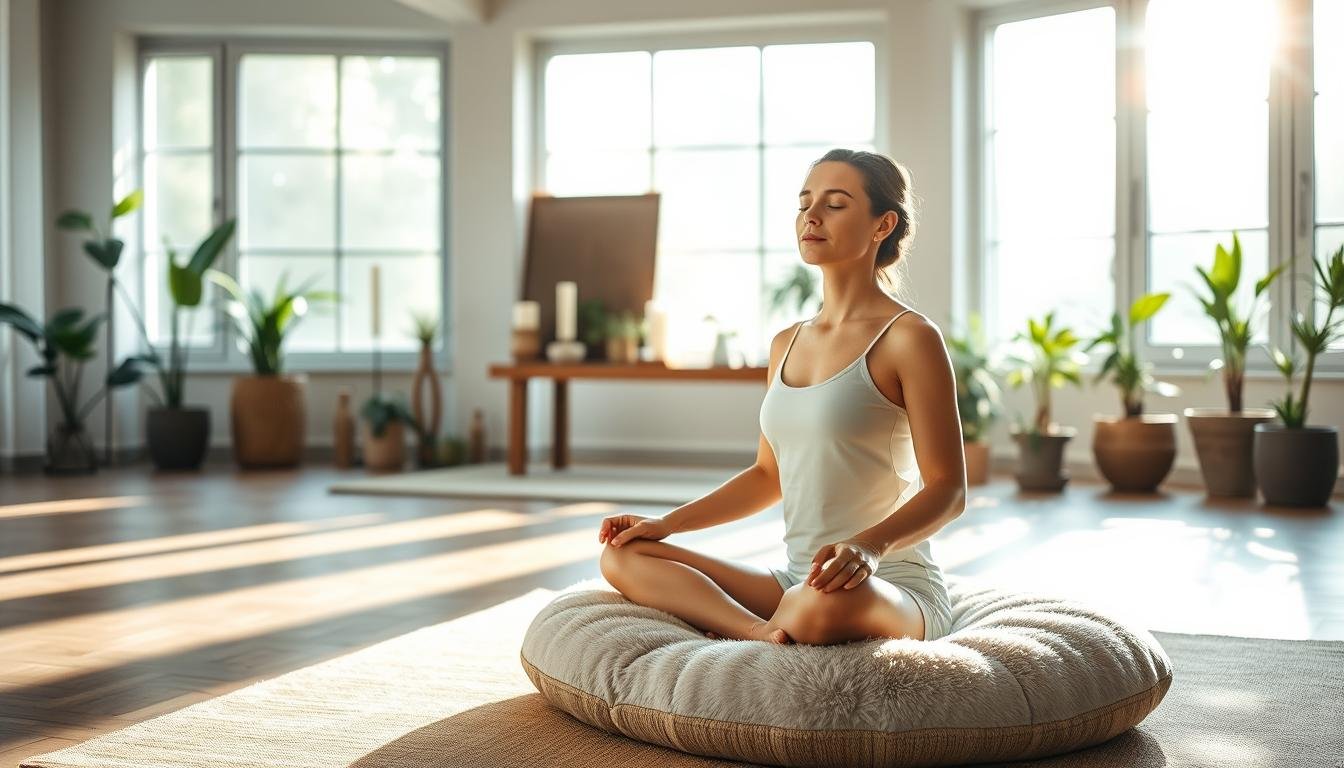
In today’s fast world, mindfulness is key. A good meditation guide can lead you to a more balanced life.
Adding meditation techniques to your day can change your life. This guide will show you how to meditate well. It gives you the tools and knowledge to master meditation.
Key Takeaways
- Discover the benefits of regular meditation practice
- Learn various meditation techniques to suit your lifestyle
- Understand how mindfulness can improve mental clarity
- Explore the connection between meditation and physical health
- Develop a personalized meditation plan
The Fundamentals of Meditation
Learning about meditation is key to using it in today’s world. This practice has ancient roots but has changed to meet modern needs. It keeps its core values while adapting to new times.
Ancient Origins and Modern Relevance
Meditation comes from ancient spiritual traditions, thousands of years old. It started in religious settings but now fits into our daily lives. Today, it’s known for meditation benefits like reducing stress, improving focus, and boosting emotional health.
Key Principles of Effective Meditation
Good meditation practices follow a few important rules. First, you need a quiet, comfy spot. Next, focusing on your breath or a mantra helps keep your mind steady. Regular practice boosts mindfulness and overall benefits.
Dispelling Common Misconceptions
Many think meditation is only for the religious or that it means stopping all thoughts. But meditation is for everyone, no matter their beliefs. It’s about being aware and accepting now, not about having a blank mind.
Science-Backed Benefits of Regular Meditation
Meditation does more than just relax you. It’s backed by science and improves health and wellbeing in many ways.
Physical Health Improvements
Meditation can lower blood pressure and reduce chronic pain. It also helps improve sleep quality, which is key for health.
Mental and Emotional Wellbeing
Meditation greatly benefits mental and emotional health. It reduces anxiety and depression symptoms, bringing calm and wellbeing. Regular practice boosts emotional control and resilience.
Cognitive Enhancement and Neuroplasticity
Meditation sharpens attention, memory, and processing speed. It boosts neuroplasticity, helping the brain adapt and learn.
Stress Reduction and Immune Function
Meditation is great for reducing stress. Chronic stress weakens the immune system. Meditation boosts immune function by lowering stress and promoting relaxation.
Adding meditation to your daily routine can greatly enhance your life quality.
Your Complete Meditation Guide: First Steps for Beginners
Starting your meditation journey as a beginner takes patience and the right setup. You need a good environment and to know what to expect. Beginning well can help you stick with it and see success.
Creating an Ideal Meditation Space
Your meditation spot should be quiet, comfy, and free from distractions. Try to have a special area for meditation at home. Add things like candles, plants, or a meditation altar to make it relaxing.
Determining the Best Time for Your Practice
Choosing the best time to meditate depends on your schedule and likes. Some like meditating in the morning to start the day right. Others prefer evening to relax before bed. Try different times to see what works for you.
Essential Equipment and Optional Props
While you don’t need much, some props can help. A good cushion or chair is key. A meditation blanket or shawl can also make you more comfortable. You might also find guided recordings, essential oils, or a timer helpful.
Setting Realistic Expectations
One big challenge is having too high hopes for meditation. Remember, it’s a skill that grows over time. Be kind to yourself if your mind strays. The goal is to be aware and kind, not to reach a certain state.
| Tip | Description |
|---|---|
| Start Small | Begin with short meditation sessions (5-10 minutes) and gradually increase the duration. |
| Be Consistent | Aim to meditate at the same time every day to establish a routine. |
| Be Patient | Understand that developing a meditation practice takes time, and it’s normal for your mind to wander. |
By following these tips and staying committed, you can create a rewarding meditation routine. It will bring balance and peace to your life.
Core Meditation Techniques for Beginners
Meditation has many techniques, but beginners should start with the basics. These core methods make meditation easier and more rewarding. They help you build a strong foundation for a consistent practice.
Breath-Focused Meditation
Breath-focused meditation is a key technique for beginners. It helps you focus on your breath to be more mindful and relaxed. Sit comfortably, close your eyes, and focus on your breath.
Notice how the air feels as it goes in and out. If your mind wanders, just acknowledge it and come back to your breath. Don’t judge yourself.
Body Scan Meditation
Body scan meditation is done lying down or sitting. It involves focusing on each part of your body, starting from your toes and moving up to your head. This technique helps release tension and relax your body.
As you focus on each part, notice any sensations or thoughts. Let go of any tension without judgment.
Guided Visualization Practices
Guided visualization uses imagery to help you relax and feel calm. A guide or recording leads you through a peaceful scenario. It’s great for beginners because it provides a clear structure for meditation.
Simple Mantra Meditation
Simple mantra meditation uses a word or sound to focus your mind. Repeating the mantra helps quiet your mind and find inner peace. Choose a mantra that feels right to you and repeat it gently.
| Meditation Technique | Primary Benefit | Best For |
|---|---|---|
| Breath-Focused | Mindfulness and Relaxation | Stress Reduction |
| Body Scan | Physical Relaxation | Tension Release |
| Guided Visualization | Calmness and Peace | Anxiety and Stress |
| Simple Mantra | Inner Peace and Focus | Mindfulness and Concentration |
Exploring these core techniques can help beginners find what works best for them. Each technique offers unique benefits. Understanding these can make your meditation practice more fulfilling.
Mindfulness Meditation: Cultivating Present Moment Awareness
Mindfulness meditation is a powerful way to be aware in the present. It helps you observe your thoughts, feelings, and body without judgment. This leads to a deeper understanding of yourself and the world.
Principles of Mindfulness Practice
The main idea of mindfulness meditation is to focus on the now. You do this by paying attention to your breath, body, or senses. Regular practice can make you more aware and reduce stress and anxiety. It’s about living in the moment, not the past or future.
Everyday Mindfulness Exercises
You can add mindfulness to your daily life with simple exercises. For instance, just a few minutes of breathing each day can help a lot. Mindfulness can also make everyday tasks more interesting and less boring.
Mindful Eating and Walking
Mindful eating means focusing on the taste, texture, and smell of your food. It makes eating more enjoyable. Mindful walking is about being aware of each step and your surroundings. These activities can turn everyday tasks into meditation.
Integrating Mindfulness Throughout Your Day
Mindfulness isn’t just for meditation; it can be part of your daily life. It can improve your focus, lower stress, and boost your well-being. Simple actions like mindful breathing or noticing sensations while showering can greatly impact your day.
Exploring Traditional Meditation Styles
Traditional meditation styles offer a wide range of methods to help us focus and be more aware. These practices have been around for centuries. They cater to different needs and preferences.
Buddhist Meditation Practices
Buddhist meditation comes from the Buddha’s teachings. It aims to improve mindfulness, concentration, and wisdom. Techniques include focusing on breathing, loving-kindness, and insight meditation. These help us understand ourselves and the world better.
Transcendental Meditation Approach
The Transcendental Meditation (TM) method uses a mantra to calm the mind. It’s practiced for 20 minutes, twice a day. It’s simple yet effective in reducing stress and promoting calm.
Zen and Taoist Meditation Techniques
Zen meditation, or Zazen, focuses on posture and breathing to reach enlightenment. Taoist meditation works on internal energy (qi) through alchemy and visualization. Both aim for balance and harmony.
Yoga-Based Meditation Methods
Yoga-based meditation combines physical poses, breathing, and meditation. It seeks inner peace and awareness. Two key techniques are:
Yoga Nidra
Yoga Nidra is a deep relaxation method. It uses guided imagery to create a state between wakefulness and sleep. It’s great for stress relief and relaxation.
Trataka (Candle Gazing)
Trataka, or candle gazing, focuses on a candle flame. It improves mental clarity and inner calm. It’s also believed to enhance vision and reduce stress.
| Meditation Style | Key Practices | Benefits |
|---|---|---|
| Buddhist Meditation | Mindfulness, loving-kindness, insight meditation | Cultivates mindfulness, concentration, wisdom |
| Transcendental Meditation | Use of a mantra | Reduces stress, promotes relaxation |
| Zen and Taoist Meditation | Posture, breath control, inner alchemy | Achieves balance, harmony, enlightenment |
| Yoga-Based Meditation | Physical postures, breath control, Yoga Nidra, Trataka | Promotes inner peace, awareness, relaxation |
Overcoming Common Meditation Challenges
Starting a meditation routine can be tough. It needs patience, dedication, and sticking with it. Knowing these challenges helps keep your practice rewarding and consistent.
Managing a Wandering Mind
Many meditators struggle with a wandering mind. It’s normal for thoughts to wander from your focus. A good strategy is to notice the distraction and gently refocus without judgment. This is a key part of meditation.
Finding Time in a Busy Schedule
Finding time for meditation can be hard. Starting with short sessions, even just a few minutes a day, is very helpful. Adding meditation to your daily routine, like right after waking up or before bed, can keep you consistent.
| Challenge | Solution |
|---|---|
| Managing a wandering mind | Acknowledge distraction and refocus |
| Finding time | Start with short daily sessions |
| Physical discomfort | Adjust posture or use props |
Addressing Physical Discomfort
Physical discomfort is a common issue. Changing your posture or using props can help. It’s about finding a balance between being relaxed and alert.
Building and Maintaining Consistency
Consistency is key to meditation’s benefits. Setting a regular time and place for your practice helps build a habit. Even a few minutes each day is better than one long session a week.
Working with Difficult Emotions
Meditation can stir up tough emotions. It’s important to approach these emotions with kindness and compassion, not avoidance or judgment. Seeing these feelings as part of your journey can help you deal with them better.
Understanding and tackling these challenges can make your meditation practice more rewarding. With persistence and the right strategies, meditation can greatly improve your wellbeing.
Advanced Meditation Techniques for Experienced Practitioners
Advanced meditation techniques help seasoned practitioners grow. They explore new levels of consciousness and inner awareness. As they progress, they seek deeper practices to understand themselves and the world better.
Loving-Kindness (Metta) Meditation
Loving-Kindness Meditation, or Metta Meditation, builds love, compassion, and kindness. It uses phrases or mantras to create warmth and understanding. “May I be happy, may I be healthy, may I be at peace” is a common mantra.
This mantra is extended to friends, neutral people, and even those we find hard to get along with.
Chakra Meditation and Energy Work
Chakra Meditation focuses on the body’s energy centers, or chakras. Practitioners visualize each chakra, starting from the root to the crown. They use colors, sounds, or symbols for each center.
This practice is believed to grow spiritually, stabilize emotions, and improve physical health.
Sound-Based and Vibrational Meditation
Sound-Based Meditation uses sounds like chanting or singing bowls to meditate. These sounds are thought to resonate with the body’s energy. Research has shown it can lower blood pressure, reduce anxiety, and improve mood.
Moving Meditation Practices
Moving meditation combines physical movement with mindfulness. It includes Tai Chi, Qigong, and Walking Meditation. These practices help cultivate awareness and inner peace while moving gently.
Tai Chi and Qigong
Tai Chi and Qigong are ancient Chinese practices. They involve slow movements, deep breathing, and mental focus. These exercises aim to balance the body’s energy, improve flexibility, and enhance health.
Regular practice can reduce stress, improve balance, and bring calm.
Walking Meditation
Walking Meditation focuses on the sensation of each step. Practitioners walk slowly and deliberately. It’s helpful for those who find sitting still hard or want to be mindful in daily activities.
Exploring these advanced techniques deepens meditation practice. It enhances mindfulness and fosters inner peace and compassion. Whether through Loving-Kindness Meditation, Chakra Meditation, sound-based practices, or moving meditations, meditation’s journey unfolds with new depths and dimensions.
Modern Tools and Resources for Meditation Success
In today’s world, many tools and resources help with meditation. These aids make meditation better and more fun for everyone. They help you get the most out of your practice.
Top-Rated Meditation Apps and Platforms
Meditation apps have changed how we practice mindfulness. Apps like Headspace, Calm, and Insight Timer offer guided meditations. They also track your progress and create plans just for you.
These platforms help with stress and sleep. They meet different needs for everyone.
Biofeedback and Neurofeedback Devices
Biofeedback and neurofeedback devices show how your body and brain work during meditation. Tools like Muse and HeartMath track your heart rate and brain waves. This helps you understand and control your meditation better.
Audio Guides and Specialized Music
Audio guides and music are key for a good meditation spot. People use nature sounds, binaural beats, or guided recordings. These sounds help you relax and focus deeper.
Books and Courses for Deeper Learning
For a deeper understanding of meditation, there are books and courses. Mindfulness books and meditation techniques can enhance your practice. Online courses and workshops offer structured learning with experienced teachers.
Using these modern tools and resources can make meditation better. They help you overcome challenges and enjoy a more rewarding meditation experience.
Conclusion: Nurturing a Lifelong Meditation Practice
As you’ve explored meditation in this guide, it’s clear that a consistent practice is crucial. It requires commitment, patience, and understanding.
Adding meditation to your daily routine helps you face life’s challenges better. It also deepens your self-awareness and improves your wellbeing. The techniques and resources in this guide are a great start for your meditation journey.
Remember to be gentle with yourself as you progress. Progress in meditation isn’t always straight. Keep going, knowing that meditation deepens your connection with yourself and the world.
Seeing meditation as a lifelong journey, not just a goal, is key. It helps you become more mindful, compassionate, and resilient. This leads to a more fulfilling life.
FAQ
What is the best time of day to meditate?
The best time to meditate is up to you. Some like to meditate in the morning to start the day right. Others prefer it before bed to relax. Try different times to see what fits your life best.
How long should I meditate for as a beginner?
Start with short sessions, 5-10 minutes, if you’re new to meditation. As you get more comfortable, you can meditate longer. Guided meditations can also help you stay focused.
What is the difference between mindfulness and meditation?
Mindfulness is about being present and aware of your thoughts and feelings. Meditation is a way to practice mindfulness, but it can also involve other techniques like focusing on your breath.
Can I meditate if I have a busy or distracted mind?
Yes, you can meditate even if your mind is busy. It’s not about having a blank mind. It’s about learning to observe your thoughts without getting caught up in them.
Are there any specific meditation techniques for stress and anxiety?
Yes, there are techniques like body scan meditation and loving-kindness meditation that can help with stress and anxiety. You can also try using a mantra or focusing on your breath to calm your mind.
Can meditation be used in conjunction with other wellness practices, such as yoga or tai chi?
Yes, meditation can complement practices like yoga and tai chi. These practices often include meditation elements. Combining them can deepen your sense of calm and well-being.
How can I incorporate meditation into my daily routine?
To make meditation part of your daily routine, set a specific time and place for it. Use reminders or apps to help you stay consistent.
Are there any recommended meditation apps or resources for beginners?
Yes, apps like Headspace, Calm, and Insight Timer are great for beginners. They offer guided meditations and tools to help you establish a regular practice.